

Australia has a worldwide reputation for being home to creatures that bite, sting, chase, poison and occasionally make visitors wonder why Australians ever leave the house.
From highly venomous snakes hiding in the outback to crocodiles patrolling tropical waterways, Australia certainly has its share of potentially dangerous wildlife. Some of the world’s most venomous snakes, spiders and marine creatures call the country home.
Yet the reality is far less frightening than Australia’s reputation suggests. Serious encounters are uncommon, and most Australian wildlife would much rather avoid people altogether.
Still, there is no denying that Australia has produced an impressive collection of creatures worthy of a healthy dose of respect.
The Inland Taipan

Australia’s Elusive Desert Snake
Far from busy beaches and suburban backyards, the inland taipan lives in the dry country of central Australia. It has a formidable reputation, yet very few people will ever see one in the wild.
The inland taipan is famous for having exceptionally potent venom. That fact often earns it the title of the world’s most venomous snake, but venom strength alone does not tell the whole story of how likely a person is to be bitten. This is a shy snake living in remote country, well away from most daily human activity. The Australian Museum
Its home is the cracking clay soil of inland floodplains. When the ground dries, deep crevices provide shelter. The snake hunts small mammals, especially rodents, moving through a landscape that can look empty until rain brings it briefly to life.
The inland taipan’s colouring also helps it blend into its surroundings. Its brown and olive tones are far less dramatic than the headlines written about it. In its own habitat, remaining unnoticed is an advantage.
Like other native predators, it plays a part in the balance of the inland environment. Its presence is a reminder that even Australia’s harshest country supports an intricate web of life.
The inland taipan deserves respect, but its story is more interesting than a frightening label. It is a highly adapted animal that has made a home in one of Australia’s most demanding landscapes.
Box Jellyfish

A Hidden Danger in Tropical Waters
The clear, warm water of northern Australia can look inviting. During marine stinger season, however, one of its most serious hazards may be almost impossible to see.
“Box jellyfish” refers to a group of jellyfish with box-shaped bells. The large Australian box jellyfish, Chironex fleckeri, is the species most associated with severe and potentially fatal stings. Its pale body and trailing tentacles can be difficult to spot in the water.
It occurs in tropical northern coastal waters, particularly around sheltered beaches and river mouths. Because it can move close to shore, local swimming advice matters more than how safe the water appears from the sand.
A box jellyfish does not hunt people. Its tentacles catch prey such as small fish, and a person can be stung by accidentally brushing against them. The severity of a sting is why northern beaches use warnings, designated swimming areas and protective clothing during stinger season.
The box jellyfish is part of the marine ecosystem, despite the danger it presents to swimmers. Its story captures a familiar Australian lesson: beautiful places deserve attention to local conditions.
A calm sea is not always a safe sea. In tropical waters, checking current beach warnings before entering the water is simply part of enjoying the coast.
The Redback Spider

The Familiar Visitor Beneath the Garden Chair
Few Australian creatures are as closely linked with the backyard as the redback spider. It may live under an outdoor chair, behind a pot or in a quiet corner of the shed.
The female redback is the one most people recognise. Her dark, rounded body usually carries a striking red marking, although the exact pattern can vary. She builds an untidy web in a sheltered place and waits for insects to become caught in its sticky threads. The Australian Museum
Redbacks have adapted remarkably well to human surroundings. Garden furniture, stored materials and outdoor structures offer the protection they would otherwise find in natural crevices. That is why checking before putting a hand into an unseen space is a sensible habit.
Although redbacks have a fearsome reputation, they do not chase people. Bites generally happen when a spider is trapped against the skin or disturbed. A suspected bite should be assessed medically, particularly if pain or other symptoms develop. The Australian Museum
The redback also has a useful role as a predator of insects. Its success around houses tells a story about how wildlife can settle into the small spaces people create.
The best approach is neither panic nor complacency: know where redbacks like to shelter, give them space and take care when moving outdoor items.
Saltwater Crocodiles

The Powerful Predator of Australia’s North
In northern Australia, a riverbank can look peaceful while a saltwater crocodile waits almost entirely out of sight. Its ability to blend into the water is part of what makes it such an effective predator.
Despite its name, the saltwater crocodile lives in both salt and fresh water. It can be found in coastal waterways, estuaries, rivers and wetlands across the tropical north. Its broad habitat means crocodile awareness is needed well beyond the beach.
A large crocodile is a powerful animal with a long history in Australia’s northern waterways. It feeds on a range of prey and is capable of sudden, fast movement, especially at the water’s edge.
Crocodiles are also an important part of northern ecosystems and hold cultural significance for many Aboriginal communities. Visitors may hope to see one from a safe viewing area, but the water itself must be treated with respect.
Local warnings are there for good reason. Parks Australia advises visitors in crocodile country to obey signs, stay out of the water and keep away from its edge. api.parksaustralia.gov.au
The saltwater crocodile is one of Australia’s most impressive wild animals. The safest way to appreciate it is from a proper lookout, with plenty of distance between its world and yours.
Blue-Ringed Octopus
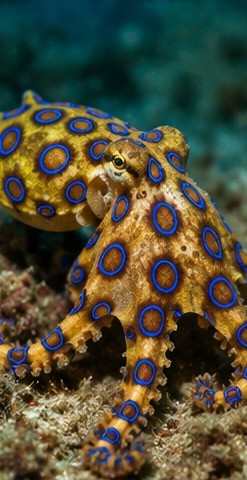
The Tiny Octopus Best Left Alone
A small octopus among the rocks might seem like an exciting discovery on an Australian shore. If bright blue rings appear across its body, the right response is to leave it exactly where it is.
Blue-ringed octopuses are small marine animals found in shallow coastal habitats. They shelter among rocks, shells and other hiding places, where their size and natural colouring can make them easy to overlook.
Those vivid rings are a warning display. The octopus may show them when it feels threatened. Its bite can deliver a dangerous toxin, even though the animal is small enough to fit in a hand.
Most encounters can be avoided by observing marine life without picking it up. Reaching into rock pools, handling shells occupied by animals or trying to pose with a small octopus creates an unnecessary risk.
The blue-ringed octopus is also a remarkable example of how much life is tucked into Australia’s tidal zones. It hunts small creatures and uses its flexible body to slip into narrow spaces that offer protection.
There is plenty to admire about this little octopus from a safe distance. Its brilliant rings make a memorable sight, but they are a message from the animal, not an invitation to touch.
Funnel-Web Spiders

The Secretive Hunter of Eastern Australia
A dark spider appearing on a wet garden path can make anyone stop in their tracks. Funnel-web spiders are among Australia’s best-known spiders, but much of their lives are spent hidden from view.
Australian funnel-web spiders are a group of species rather than a single spider. Many live in sheltered burrows, using silk around the entrance to detect passing prey. Moist soil, leaf litter and protected garden corners can provide suitable habitat. The Australian Museum
The Sydney funnel-web is especially well known because its bite can be dangerous. Males sometimes wander, which brings them into contact with people around homes and gardens. A suspected funnel-web bite needs immediate first aid and urgent medical care. The Australian Museum
These spiders are predators. They feed on insects and other small animals, helping shape the busy world beneath fallen leaves and logs.
Their reputation can make every large, dark spider look alarming. Identification from a quick glance is unreliable, so the sensible response is to avoid handling an unfamiliar spider and keep hands out of hidden spaces.
The funnel-web is a striking part of Australia’s wildlife. It calls for caution, certainly, but it is also an animal with a particular place in the forest floor and garden habitat.
Stonefish
.

The Seafloor Master of Disguise
A stonefish can be right in front of someone and still look like part of the seabed. Its rough, mottled body is an extraordinary disguise among rocks, sand and coral.
Stonefish occur in tropical coastal waters, where they spend much of their time resting on the bottom. They are ambush predators, waiting for small fish or other prey to come within reach.
Their camouflage creates a risk for people wading in shallow water. A stonefish has venomous spines along its back, and a person who steps on one can suffer a serious, extremely painful injury.
The fish is not pursuing swimmers. Remaining still and blending into the surroundings is how it survives. Trouble arises when a human fails to notice the animal and makes contact with it.
Stonefish show how a creature can be both hazardous and well suited to its environment. The same features that make it difficult for a person to see also help it avoid predators and catch food.
For anyone exploring tropical shallows, the lesson is straightforward: watch where you place your feet, avoid touching unfamiliar marine animals and follow local advice about the area.
Cone Snails

The Beautiful Shell with a Hidden Defence
A patterned cone shell can look like the perfect souvenir from a beach walk. If the animal is still inside, it is best admired without being picked up.
Cone snails are marine molluscs found in Australian waters. Different species have different patterns, habitats and prey. Many live around reefs or sandy seabeds, where their attractive shells can make them tempting to handle.
These snails hunt using a specialised, harpoon-like tooth that delivers venom. The venom helps them capture prey, which may include marine worms, other molluscs or fish, depending on the species.
Some cone snail species can be dangerous to people. The safest rule is simple and easy to remember: never handle a live cone shell. A shell on the seafloor may still have its occupant inside, even if it appears motionless.
The cone snail’s beauty is part of its fascination. Its intricate pattern draws the eye, while the living animal inside has an unexpectedly sophisticated way of hunting.
Australia’s reefs and shorelines reward patient observation. With a cone snail, looking closely and leaving it in place gives you the best of the encounter.
Tiger Snakes

A Striking Resident of Australia’s Wetlands
A tiger snake moving through long grass near water is a sight that deserves a wide berth. It is a venomous native snake, but it would generally prefer room to escape.
Tiger snakes are found in parts of southern and eastern Australia. They are often associated with wetlands, creeks and other places where food and shelter are available. Their diet includes frogs, fish and small mammals.
The name suggests bold stripes, yet tiger snakes vary greatly in appearance. Some are strongly banded, while others have faint markings or look almost uniform in colour. That variation makes colour alone a poor way to identify a snake.
When threatened or cornered, a tiger snake may raise its head and flatten its body as a warning. The display is a reason to move away calmly and give it space, not to move closer for a photograph. The Australian Museum
Tiger snakes help control prey populations and belong in the habitats they occupy. Encounters are easier to avoid when people watch where they walk and leave snakes undisturbed.
Its reputation is serious for good reason, but the tiger snake is more than a danger to be feared. It is a capable hunter and a distinctive part of Australia’s wetland wildlife.
And Then There Are Bluebottles

The Beach Visitor Carried by the Wind
A line of brilliant blue shapes along the sand can be an intriguing sight after a windy day. On Australian beaches, it often means bluebottles have been blown ashore.
A bluebottle is a floating colony of specialised organisms, rather than a single jellyfish. Its gas-filled float rides on the surface while long tentacles hang beneath it and catch small prey.
Wind and currents decide where bluebottles travel. When conditions push them toward shore, many can arrive on the same beach. Their blue colour makes them easy to recognise once they have washed up, although tentacles in the water are much harder to see.
Bluebottle stings are usually painful, and a washed-up bluebottle can still sting. That makes it sensible to leave them alone and take notice when large numbers appear along the shoreline.
They are a natural part of ocean life, not a sign that something has gone wrong with the beach. Fish and other sea creatures interact with them as they drift across the surface.
The bluebottle is a small reminder that the sea is always moving. What appears on the sand today may have travelled a long way with the wind and current.
Australia’s Deadly Reputation
Australia undoubtedly has some formidable wildlife, but its reputation can sometimes get a little carried away.
Millions of Australians spend their lives swimming, camping, gardening, bushwalking and travelling through the country without ever having a serious encounter with dangerous wildlife.
Most animals do not hunt humans and will avoid confrontation when given the opportunity.
Australians grow up learning a few simple habits—don’t put your hands somewhere you cannot see, leave snakes alone, obey crocodile and marine-stinger warnings, and don’t pick up unfamiliar creatures simply because they look interesting.
It isn’t fear. It is respect.
Living Alongside Australia’s Wildlife
Perhaps one of the most Australian things about our dangerous creatures is how ordinary they eventually become.
A Redback in the shed, a snake crossing a country road or a Bluebottle washed onto the beach might horrify an overseas visitor, while an Australian is more likely to give it some space and get on with the day.
Our wildlife is part of what makes Australia extraordinary.
From the deserts and tropical rivers to suburban backyards and coral reefs, these creatures have adapted to some of the harshest and most varied environments on Earth.
Some can certainly be dangerous, but they also deserve protection and respect.
After all, they were here long before our houses, highways and backyard barbecues arrived—and sharing the country with them is simply part of living in Australia.


